


Hard Money Loans: What They Are and When They Make Sense
When most people think of getting a mortgage, they picture a traditional loan from a bank or mortgage lender — something backed by income verification, credit checks, and a long list of documents. But there’s another type of financing that plays a key role in certain situations: the hard money loan.
Let’s break down what these loans are, who they’re for, and when they might (or might not) make sense.
What Is a Hard Money Loan?
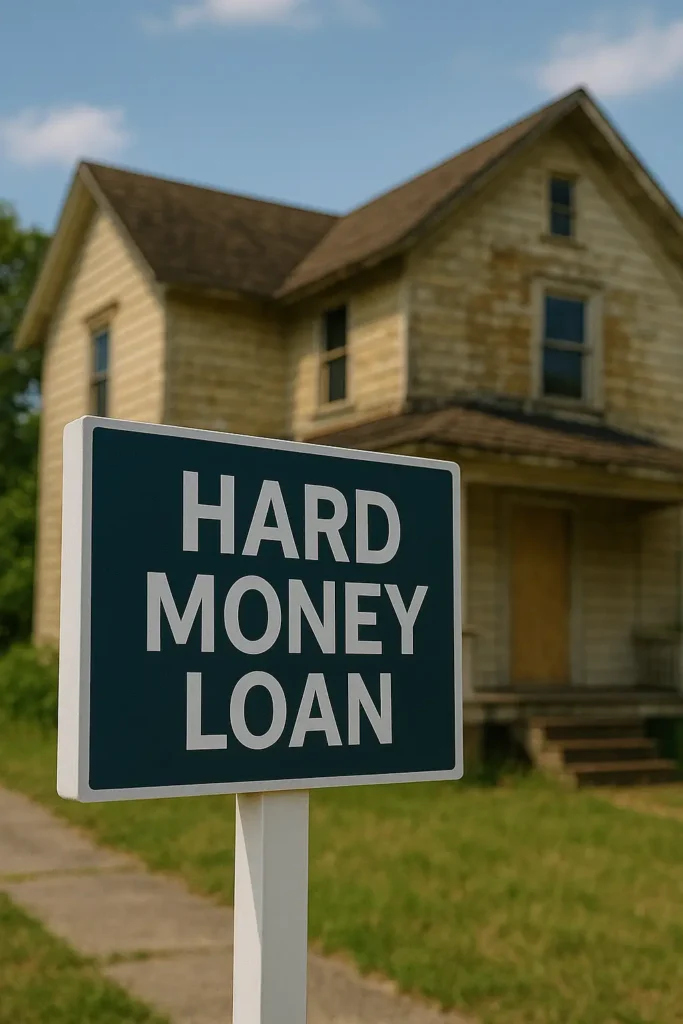
A hard money loan is a short-term, asset-based loan secured by real estate. Unlike traditional loans, which focus on the borrower’s credit and income, hard money lenders primarily look at the value of the property being used as collateral.
These loans are typically funded by private investors or small lending firms, not banks or credit unions. The approval process is much faster, but the trade-off is a higher cost.
Who Uses Hard Money Loans?
Hard money loans are not designed for typical homebuyers. They’re most often used by:
- Real estate investors and flippers who need to close quickly or renovate and resell within months.
- Buyers of distressed properties that don’t qualify for conventional financing.
- Borrowers with credit challenges who need temporary financing while improving their financial situation.
- Developers or builders who need short-term bridge financing for a project.
Essentially, these loans make sense when speed matters more than cost, or when property condition disqualifies it from traditional lending.
Typical Terms and Costs
Hard money loans are designed to be short-term solutions — usually 6 months to 2 years. They come with higher rates and fees than traditional mortgages because they carry more risk for the lender.
- Interest rates: 9% – 14% (sometimes higher)
- Loan-to-Value (LTV): usually 60% – 75% of the property’s current value
- Points (fees): 2% – 5% of the loan amount, paid upfront
- Term length: 6 – 24 months
- Payments: often interest-only, with a balloon payment at the end
Because these are short-term loans, the goal is not to hold them long — they’re a means to an end.

Benefits of Hard Money Loans
- Speed: Loans can close in days, not weeks — ideal for competitive or time-sensitive deals.
- Flexibility: Less emphasis on credit and income; lenders make case-by-case decisions.
- Property-based approval: If the deal makes sense, approval is possible even with imperfect borrower financials.
- Helpful for renovation projects: Funds can often include rehab or construction costs.
Drawbacks and Risks
- Higher cost: Interest rates and fees are significantly higher than traditional loans.
- Short term: Balloon payment due soon — borrower must refinance or sell.
- Market risk: If values drop or a sale is delayed, you may be stuck or need extensions.
- Not for long-term ownership: These loans are bridges, not permanent financing.
Where to Get Hard Money Loans
- Private investors and lending firms that specialize in asset-based lending
- Local or regional hard money lenders (often found through real estate investor networks or mortgage professionals)
- Specialized mortgage brokers with relationships to private lenders
If you’re considering this route, work with an experienced loan officer or advisor who can compare traditional and private options — and help you understand total cost and your exit strategy.

Are Hard Money Loans Right for You?
Ask yourself:
- Am I buying or fixing a property that won’t qualify for a standard loan?
- Do I need to close very quickly?
- Do I have a clear plan to refinance or sell within 6–12 months?
If the answer is yes, hard money might be the right bridge to your next opportunity. If not, consider other creative financing options like bridge loans, DSCR loans, or renovation loans, which may offer better long-term value.
Other Questions Borrowers Often Ask
- How fast can a hard money loan close? — Sometimes in as little as 3–5 days.
- Can I get a hard money loan with bad credit? — Possibly; approval is based more on property value and equity.
- What happens if I can’t refinance or sell on time? — You may need to extend the loan or risk foreclosure, so a clear exit strategy is critical.
- Are these loans available for primary residences? — Rarely. They’re mainly used for investment properties.
Final Thoughts
Hard money loans fill an important niche — offering speed and flexibility when conventional financing isn’t an option. Used wisely, they can be powerful tools for investors and developers. Used carelessly, they can become very expensive mistakes.
Want tailored advice or a side-by-side comparison of hard money, DSCR, or bridge options? Reach out — I’m happy to help you evaluate terms, risks, and the right exit strategy for your project.
Contact: 312-296-4175 • connect@borislending.com — I lend in all 50 states and I am never too busy for your referrals!!

I have been in the mortgage industry since 1997 and I understand the anxiety that comes with making the most expensive investment of a lifetime. My objective is to be your advisor, to educate you and to make the mortgage loan transaction as transparent and as stress-free as possible. I enjoy establishing personal connections and work mostly by referral. I thoroughly explain the process and available options, and guide my clients to make choices that best fit their needs and financial goals. Once the underwriting begins I communicate regularly and keep my clients apprised of the loan status from the beginning through the end. My relationship with clients does not end at the closing table. You are my client for life and I am always available to answer your questions and provide you with guidance.