

Non-QM Loans: The Mortgage Option for People Who Don’t Fit the “Perfect” Box
If you’ve ever been told “you don’t qualify” and thought, “That makes no sense—I make good money,” you’re not alone.
Traditional mortgages (Conventional, FHA, VA, USDA) are built for W-2 employees with predictable income and “standard” documentation. But many of the strongest borrowers today don’t look perfect on paper:
- Self-employed owners with high income but significant tax deductions.
- High-net-worth individuals with massive assets but “weird” monthly cash flow.
- Real estate investors with complex portfolios that traditional banks don’t understand.
- Borrowers with “Credit Hiccups” caused by a one-time life event that doesn’t reflect their current reality.
That’s where Non-QM loans come in.

What Does “Non-QM” Actually Mean?
A Qualified Mortgage (QM) is a loan that follows rigid federal rules designed for the “average” borrower. To fit in the QM box, you usually need two years of tax returns and a specific Debt-to-Income (DTI) ratio.
A Non-QM (Non-Qualified Mortgage) loan doesn’t fit those rigid boxes, but it still requires the lender to verify your ability to repay. The difference is how that ability is documented.
The Simple Breakdown:
- QM Loans: “Show us the standard paperwork in the standard format.”
- Non-QM Loans: “Show us you can afford the loan using the reality of your financial life.”

Who Are Non-QM Loans For?
1. Self-Employed & Gig Economy Workers
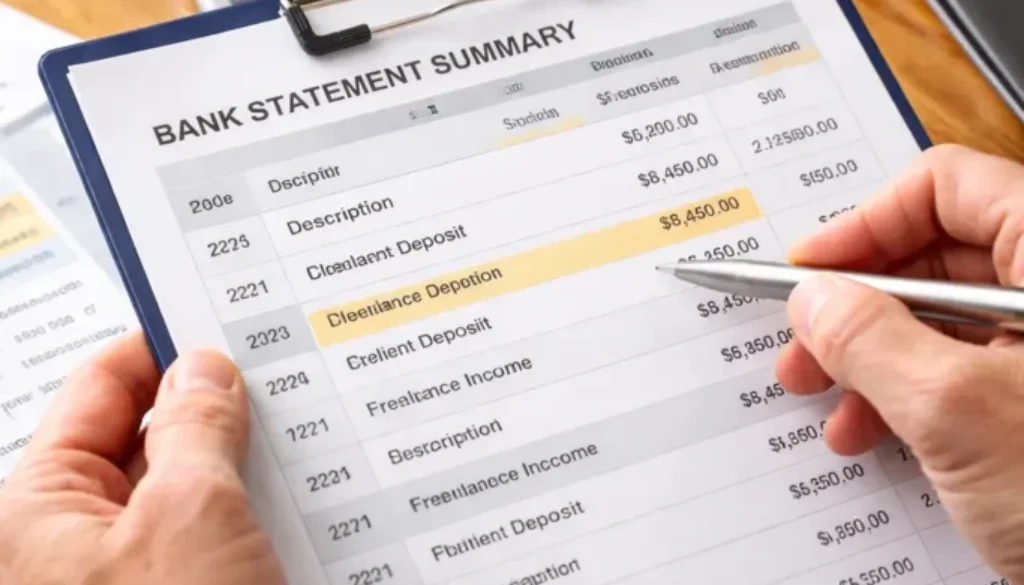
Business owners often maximize deductions to save on taxes. While smart for business, it can make your “taxable income” look too low for a bank. Non-QM allows you to qualify using 12–24 months of Bank Statements or a Profit & Loss (P&L) statement instead of tax returns.
2. Real Estate Investors (DSCR Loans)
Investors often hit a “wall” with traditional banks after a few properties. DSCR (Debt Service Coverage Ratio) loans are the solution. They qualify you based on the property’s rental income, not your personal income. If the rent covers the mortgage, you’re in.
3. High-Net-Worth & Retirees (Asset-Based)
If you have $2M in the bank but no “job,” a traditional bank might turn you down. Non-QM uses Asset Depletion or Asset Qualification, converting your liquid assets into a calculated monthly income stream to satisfy debt ratios.
4. People with “Niche” Property Types
Standard loans often won’t touch non-warrantable condos, condotels, or unique properties. Non-QM lenders are much more flexible with the type of real estate you are buying.
5. Foreign Nationals
Non-QM is the primary gateway for non-citizens who have no US credit or SSN but have significant assets and want to invest in US real estate.

Common Types of Non-QM Loans
| Loan Type | Best For… | Key Logic |
|---|---|---|
| Bank Statement | Business owners / Freelancers | Uses gross deposits to calculate qualifying income. |
| DSCR (Investor) | Rental property buyers | Qualifying is based on rent vs. mortgage payment. |
| Asset Qualifier | Retirees / High-net-worth | Uses liquid wealth as the primary source of repayment. |
| Flexible Jumbo | High-end buyers | When the loan is over the conforming loan limit but the paperwork is non-standard. |
| Recent Event | Post-foreclosure / bankruptcy | Shorter “waiting periods” than FHA or Conventional. |
The “Fine Print”: Pros and Cons
These loans are powerful tools, but they come with different rules than your standard 30-year fixed.
The Benefits
- Flexible Income: Use bank statements, assets, or rental income.
- Speed: Underwriting is often more “common sense” and faster for complex files.
- Opportunity: It allows you to buy or invest now instead of waiting two years for a tax return to “look right.”
The Tradeoffs
- Higher Rates: Expect rates to be slightly higher (risk-based pricing).
- Higher Down Payments: You’ll typically need 15–20% down, depending on the program.
- Prepayment Penalties: On investment/DSCR loans, there is often a penalty if you pay the loan off in the first 1–3 years (though this can often be “bought down” or waived).
- Housing History: Lenders will scrutinize your last 12 months of rent or mortgage payments. A “clean” housing history is non-negotiable for most.
Myths That Need to Die
- “Non-QM is Subprime 2.0.” False. Subprime was about lending to people who couldn’t pay. Non-QM is about lending to stable people who have “complex” paperwork.
- “You can’t refinance.” False. Most people use Non-QM as a “bridge.” You buy now, then refinance into a Conventional loan once your credit improves or your tax returns show the necessary income.
- “It’s only for investors.” False. Many primary residences are bought with Bank Statement or Asset Depletion loans.

When Does a Non-QM Loan Make Strategic Sense?
A Non-QM loan is smartest when the alternative is missing out. If you find the perfect home or a killer investment property today, waiting two years for your tax returns to catch up might cost you the deal (and the equity growth). Using Non-QM allows you to secure the asset today and optimize your financing later.
The “Good Borrower, Bad Paperwork” Test
You are a Non-QM candidate if:
- You can comfortably afford the monthly payment.
- You have a solid down payment (typically 15%+).
- You have a clean 12-month housing history.
- The only thing stopping you is a checklist at a traditional bank.
Bottom Line
Non-QM loans exist for the modern economy. Whether you are a business owner, a scaling investor, or a retiree with high assets, your “nontraditional” status shouldn’t stop you from owning real estate. Have a question about Non-QM loans? Feel free to reach out to me at 312-296-4175 or email me at connect@borislending.com. I’m here to help you navigate the process and make the right decisions. I lend in all 50 states and I am never too busy for your referrals!!

I have been in the mortgage industry since 1997 and I understand the anxiety that comes with making the most expensive investment of a lifetime. My objective is to be your advisor, to educate you and to make the mortgage loan transaction as transparent and as stress-free as possible. I enjoy establishing personal connections and work mostly by referral. I thoroughly explain the process and available options, and guide my clients to make choices that best fit their needs and financial goals. Once the underwriting begins I communicate regularly and keep my clients apprised of the loan status from the beginning through the end. My relationship with clients does not end at the closing table. You are my client for life and I am always available to answer your questions and provide you with guidance.